Aggressione aerea israeliana contro la Siria
Siria, fonti Usa confermano attacco aereo Israele
di Michele Giorgio (1 Novembre 2013)
La notizia era stata data ieri da alcune televisioni arabe. Nel corso della
notte un funzionario dell'Amministrazione Obama ha confermato l'attacco.
http://www.pane-rose.it/files/index.php?c3:o41156:e1
Israeli warplanes strike targets
inside Syria
By Thomas Gaist - 2 November 2013
http://www.wsws.org/en/articles/2013/11/02/syri-n02.html
La notizia era stata data ieri da alcune televisioni arabe. Nel corso della notte un funzionario dell'Amministrazione Obama ha confermato l'attacco.
di Michele Giorgio
Roma, 1 novembre 2013, Nena News - Come era avvenuto in passato la
conferma dei raid compiuti dall'aviazione israeliana contro la Siria e'
arrivata dagli Stati Uniti. Un funzionario dell'amministrazione Obama la scorsa
notte ha detto alla Cnn che effettivamente "aerei militari di
Israele" hanno colpito ieri una base siriana nei pressi della citta'
portuale Latakia, cosi' come avevano riferito ieri diverse televisioni arabe.
Secondo la fonte americana, il raid aveva l'obiettivo di "impedire il
trasferimento di missili" a Hezbollah. La stessa motivazione usata da
Israele per giustificare tutti gli attacchi aerei contro la Siria compiuti
dall'inizio dell'anno.
Intanto la Siria non può più produrre né utilizzare armi chimiche. Questo
annuncio, che certo avrà riflessi diplomatici e politici importanti, è giunto
ieri dall'Opac, l'Organizzazione per la proibizione di armi chimiche. Nelle
stesse ore però è giunto anche l'ultimo bilancio non ufficiale di vittime
dall'inizio della guerra civile, più di due anni fa. È salito a oltre 120.000
il totale dei morti, dai dati dell'Osservatorio nazionale per i diritti umani,
ong vicina all'opposizione siriana. Tra le vittime 42.945 sono civili (di cui
6.365 bambini), quasi 30.000 sono soldati e oltre 18 mila sostenitori del
regime. I ribelli morti sarebbe 18.122 a cui si aggiungono migliaia di vittime
non identificate, in buona parte jihadisti giunti dall'estero per la «guerra
santa» contro l'«infedele» presidente siriano Bashar Assad. Nei combattimenti sarebbero
inoltre rimasti uccisi 187 guerriglieri libanesi di Hezbollah che combattono a
sostegno delle truppe governative.
I team dell'Opac hanno ispezionato 21 dei 23 siti dichiarati da Damasco. I
restanti due erano troppo pericolosi da visitare ma il loro equipaggiamento è
stato trasferito in altri siti controllati. «Tutti gli stock di armi e agenti
chimici sono stati sigillati» ha detto il portavoce dell'Opac, Christian
Chartier, insistendo sul fatto che i sigilli sono «a prova di manomissione». Si
tratta, ha aggiunto, «di 1.000 tonnellate di agenti chimici e 290 tonnellate di
armi chimiche». Tutti gli stock sono rimasti sui siti «non siamo ancora in fase
di movimento», ha detto. La Siria dispone anche di 1.230 munizioni non ancora
riempite di agenti chimici. Il consiglio esecutivo dell'Opac, che si riunirà il
5 novembre prossimo, dovrà decidere le scadenze e i modi per la distruzione
delle armi e degli agenti chimici sulla base del piano generale consegnato
dalla Siria il 24 ottobre.
Assad sta costruendo la sua credibilità e affidabilità sul rispetto degli
impegni assunti di fronte alla comunità internazionale a settembre, quando
grazie a un accordo con la Russia sul disarmo chimico è riuscito a fermare un
attacco militare degli Stati Uniti dato ormai per certo. Il suo atteggiamento
ha già ottenuto qualche risultato. A cominciare dalle parole pronunciate in
diverse occasioni dall'inviato dell'Onu, Lakhdar Brahimi, due giorni fa in
visita a Damasco, secondo il quale Assad può contribuire alla transizione politica
verso una nuova Siria.
Possibilità che l'opposizione siriana continua ad escludere in modo categorico
e ripete che non andrà alla conferenza di pace di Ginevra 2 senza aver prima
ottenuto la garanzia che Assad si farà subito da parte.
Tuttavia il presidente siriano, emerso più forte dagli sviluppi diplomatici,
ripete di non aver ancora preso una decisione sulla possibilità di ricandidarsi
nel 2014. Più di tutto è tornato a invocare la cessazione degli aiuti,
finanziari e militari, ai ribelli e ai jihadisti che combattono contro il
governo centrale. «Fermare il sostegno ai terroristi e fare pressioni sui Paesi
che li sostengono è il passo più importante per creare le condizioni adeguate
per il dialogo», ha affermato. Paesi che non ha chiamato per nome, ma
sottintendeva: le petromonarchie del Golfo, la Turchia e anche agli Stati Uniti
che sostengono in ogni modo i gruppi armati.
Sul terreno, intanto, circa 1.800 civili, tra cui bambini e donne, sono stati
evacuati dal sobborgo di Muaddamiya, a sud-ovest di Damasco, una roccaforte dei
ribelli che l'Esercito siriano prova a riconquistare. L'operazione è stata resa
possibile da un cessate il fuoco con la mediazione della Mezzaluna rossa
siriana. Un'iniziativa simile era stata attuata il 12 ottobre scorso, quando
altri 3.000 civili erano stati evacuati da Muaddamiya. Ma i combattimenti
continuano in altri sobborghi e quartieri periferici della capitale. Come
quello di Hajar al Aswad. Nella provincia di Homs, invece, 11 civili sono stati
uccisi dai ribelli in una incursione nel villaggio di Shalluh, a maggioranza
alawita, la stessa confessione religiosa di Bashar Assad.
Nena News
===== o ========== o ========== o ========== o ========== o ========== o ========== o =====
Israeli warplanes strike targets inside Syria
By Thomas Gaist
2 November 2013
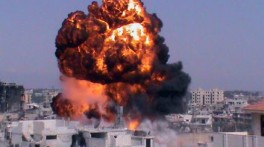
Israeli warplanes attacked Syrian targets near the port city of Latakia and in the Jaramana neighborhood of Damascus in a wave of strikes beginning around midnight on Wednesday. The attacks were apparently intended to take out Russian-made missile systems under the control of the government.
Israeli representatives have refused to confirm the source of the attacks, while implying that they are designed to prevent weapons transfers to Hezbollah. “We have said many times that we will not allow the transfer of advanced weapons to Hezbollah,” said Home Front Defense Minister Gilad Erdan, speaking to Israel Radio .
“We are sticking to this policy and I say so without denying or confirming this report,” he said.
In reality, the strikes are meant to weaken Israel’s adversaries and establish air superiority in preparation for an escalating region-wide conflict.
Numerous media reports have confirmed the strikes and attributed them to the Israeli military. Al-Arabiya reported on its web site Thursday, “Israel was behind a series of explosions that rocked a Syrian airbase in the norther Latakia province.... The bombing targeted a shipment of surface-to-air missiles [SAMs] that was headed for Hezbollah in Lebanon.”
Israeli officials denounced the Obama administration for confirming to CNN that the strike had been carried out by Israel. According to the Times of Israel, “Israel’s Channel 10 TV on Friday quoted Israeli officials branding the American leak as ‘scandalous.’ ”
Speaking to the British newspaper Guardian, an Israeli official said, “Sharing information is embedded in the nature of the relationship between Israel and the US. It’s like a big pipeline that’s open to permanent flow. So disclosing information is a cause for dismay.”
Along the same lines, Alex Fishman of the Israeli daily Yedioth Ahronothwrote, “What on earth are the Americans thinking when they finger Israel as responsible for the strikes in Syria?”
“Past experience suggests that we shared information with them on our operational activity so as to prevent embarrassment and surprise, but Washington is selling our secrets on the cheap,” Fishman continued. “This is now dangerous and contemptible behavior committed deliberately by the administration, with the aim of sabotaging Israeli defense policy.”
The Israeli attacks underscore the determination of Tel Aviv to press ahead with a strategy of aggressive confrontation with the Assad regime and the Iranian-backed Hezbollah forces operating in Syria and Lebanon, in spite of the Obama administration’s decision to at least temporarily postpone direct strikes against Syria and engage in further negotiations with Tehran.
“Israel is sending a message to Assad, saying ‘don’t play games with us.’ But Israel must also realize that the situation is becoming much more delicate than ever before because this is going against the US diplomatic agenda,” Uzi Rabi, director of Middle Eastern studies at Tel Aviv University, told Reuters .
Israel has already launched at least three major air strikes against Syria this year—in January, May and July. On January 31 of this year, explosions struck a convoy parked in front of Syria’s Scientific Studies and Research Center in the Rif Dimashq governorate, which was alleged to be carrying weapons intended for Hezbollah forces in Lebanon.
Then on May 3 and 5, airstrikes struck the Damascus International Airport and Jamraya, Al-Dimas and Maysalun. While neither attack was officially confirmed by the Israeli military, there is no doubt about who carried out the strikes, which killed at least 300 Syria soldiers.
The Israeli strikes point to the growing threat of a region-wide war. In 2006, Israel fought a month-long war in Lebanon against Hezbollah forces, which received substantial military aid from Iran during and prior to the conflict. The strikes launched by Israel this week are part of its effort to secure complete air superiority over Lebanese air space in preparation for another such war.
The attacks coincided with the announcement that the Syrian regime has eliminated its capacity to deploy chemical weapons. The Organization for the Prohibition of Chemical Weapons stated on Thursday that Syria’s chemical weapons stockpiles have been secured with “tamper proof” seals that cannot be removed.
“This was a major milestone in the effort to eliminate Syria’s chemical weapons program,” said Ralf Trapp, a specialist in chemical weapons and disarmament, to Reuters.
“Most of the sites and facilities declared by Syria to the OPCW have been inspected, their inventories verified, equipment for chemical weapons production disabled and put beyond use, and some of the unfilled weapons have also been disabled,” Trapp said.